


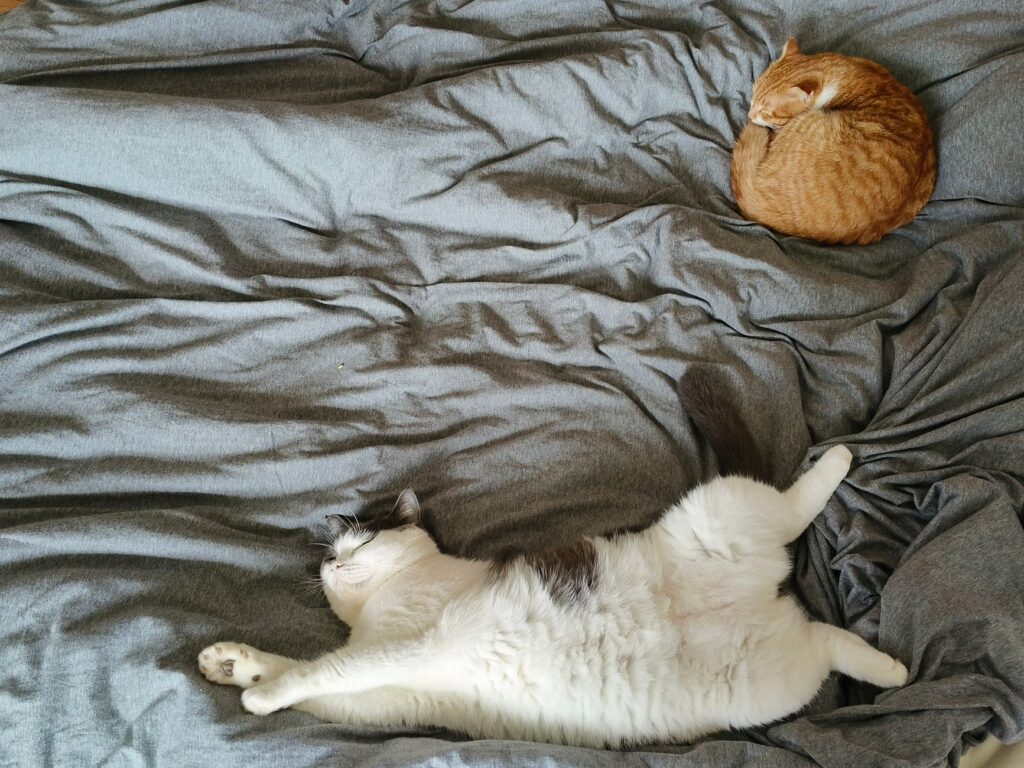
Have you ever paused to marvel at your cat sprawled across a sunbeam, contorted into an impossible pretzel shape, or softly twitching their paws while floating through dreamland? As cat parents, we spend countless hours watching our feline companions sleep—and with good reason. Domestic cats spend anywhere from 12 to 16 hours a day in slumber, with senior cats and kittens snoozing up to 20 hours. But feline sleep is far more than a simple period of rest. It is a highly complex, biological masterpiece shaped by millions of years of evolution as crepuscular predators.
Understanding the true cat sleeping positions meaning offers a fascinating window into your companion’s subconscious state, physical comfort, emotional security, and overall health. As feline behavior specialists, we decode the neuroscience, evolutionary physiology, and emotional subtleties behind every curl, stretch, and twitch—helping you cultivate a mindful, serene lifestyle for your beloved pet.
The Neurological Architecture of Feline Sleep
To truly grasp why cats sleep the way they do, we must first understand their unique neurological architecture. Unlike humans, who typically experience one continuous consolidated block of sleep each night (monophasic sleep), cats are natural polyphasic sleepers. They break their sleep into numerous brief cycles throughout the day and night, perfectly aligned with their ancestral hunting rhythms.
Slow-Wave Sleep (SWS) vs. Deep REM Sleep
Feline sleep transitions through distinct physiological stages, primarily divided into light Slow-Wave Sleep (SWS) and Rapid Eye Movement (REM) sleep:
- Slow-Wave Sleep (Light Sleep): Accounting for approximately 70% of a cat’s total sleep time, this is a stage of high sensory awareness. During SWS, your cat’s body rests, heart rate slows, and blood pressure drops, but their auditory and olfactory pathways remain fully active. Their ears may swivel toward ambient sounds, and their muscles retain subtle tension, allowing them to spring into action in milliseconds if a threat or prey appears.
- Rapid Eye Movement (REM) Sleep: Making up the remaining 30%, deep REM sleep occurs in short bursts lasting 5 to 15 minutes. During REM, brain activity spikes to levels nearly identical to waking hours. This is the stage where dreams occur, memory consolidation takes place, and essential cellular repair occurs within the nervous system.
Decoding Cat Sleeping Positions Meaning: What Your Cat’s Body Language Reveals
A cat’s physical posture during sleep is never random. It is governed by two primary drivers: thermoregulation (regulating internal body temperature) and perceived environmental safety. By analyzing their position, you can immediately assess your feline’s physiological and psychological state.
1. The Crescent or ‘Donut’ Curl
The Posture: Nose tucked tightly into the tail, body rolled into a compact sphere.
The Science: This classic position is rooted in evolutionary self-preservation. By curling into a ball, cats minimize their exposed surface area, conserving vital body heat. Furthermore, this posture physically protects their vulnerable abdominal organs—the stomach, liver, and intestines—from potential predators. When a cat chooses the crescent position, they may be slightly chilly or instinctively seeking a secure, self-contained boundary.
2. The Belly-Up Exposure (The Vulnerable Sploot)
The Posture: Lying flat on the back with legs outstretched, belly fully exposed to the room.
The Science: In the lexicon of feline behavior, exposing the abdomen is the ultimate non-verbal display of absolute security and trust. The abdominal area houses vital organs protected only by skin and muscle, with no skeletal ribcage covering the lower abdomen. A cat sleeping belly-up is declaring that they feel 100% safe from threats in their environment. It also signifies that they are relaxed enough to vent excess body heat when ambient temperatures rise.
To encourage this level of serene bliss, pamper your feline with a calming bodily massage before naptime using the SerenityClaw Electric Head Massager ($41.90), designed to soothe neural tension and melt away everyday environmental stress. Enjoy Free US Shipping on all wellness essentials to keep your kitty pampered.
3. The Classic Cat ‘Loaf’
The Posture: Upright resting with paws tucked neatly beneath the chest, eyes softly closed or half-lidded.
The Science: The loaf posture represents a state of passive alertness. The cat is comfortable and conserving energy, yet they have chosen not to enter deep REM sleep. Because their paws are planted directly beneath their center of gravity, they can react swiftly if needed. It is a harmonious balance between relaxation and spatial readiness.
4. The Side Sleeper (Deep REM Recovery)
The Posture: Lying fully on their side with limbs extended out, muscles completely limp.

The Science: When a cat stretches out laterally, they are entering their deepest phases of restorative sleep. Muscle atonia (temporary muscular paralysis triggered by the brainstem) occurs in this position, preventing the cat from physically acting out their dreams. Side sleeping signals profound psychological comfort, optimal ambient temperature, and structural joint relaxation.
Give your deep-sleeping companion the ultimate orthopedic cushion with the Chauffeur Roadster Velvet Cat Bed ($67.90), crafted with plush velvet and ergonomic contours for maximum pressure-point relief during long REM sessions. Standard orders come with Free US Shipping!
5. The Paw-Over-Face Shield
The Posture: One or both paws draped across the eyes or nose.
The Science: This adorable posture serves a functional purpose: sensory block. Cats use their paws or tail to shield their sensitive retina from harsh sunlight or artificial indoor lighting. It also helps lock in micro-facial warmth around the nose during cool weather.
What Do Cats Dream About? Inside Feline REM Sleep
If you have ever noticed your cat twitching their whiskers, flicking their paws, or uttering soft squeaks while asleep, you have witnessed feline REM sleep in real-time. But what are they actually experiencing?
Neurological research pioneered by French scientist Michel Jouvet revealed that the feline brainstem contains a region called the locus coeruleus, which inhibits physical movement during sleep. When this pathway is monitored, scientists observe brainwave patterns in sleeping cats that mirror active hunting behavior. Cats dream about their daily lived experiences: stalking prey, pouncing on toys, grooming, investigating scents, and interacting with their human caregivers.
To ensure your cat experiences fulfilling, positive dream states, daily mental and physical enrichment during waking hours is essential. Spritzing vertical scratchers or resting nooks with Elysian Euphoria Catnip Spray ($13.90, featuring Free US Shipping) helps stimulate happy olfactory pathways, releasing endorphins that set the stage for calm, restorative dreaming.
Optimizing Mindful Sleep Hygiene for Your Spoiled Feline
As dedicated cat guardians, elevating our pets’ sleep environment is one of the most effective ways to support their longevity and emotional well-being. Here are four evidence-based recommendations for mindful sleep hygiene:
- Respect the Thermoneutral Zone: A cat’s natural thermoneutral zone—the ambient temperature range where they expend zero metabolic energy to keep warm or cool—is between 86°F and 100°F (30°C to 38°C). Provide warm plush nooks, sun spots, or elevated felt beds away from cold floor drafts.
- Provide Vertical Sanctuary Options: In feline psychology, height equals safety. Cats sleep more soundly when elevated above ground level where human foot traffic occurs.
- Honor the Sleep-Wake Rhythm: Avoid waking a cat during deep REM sleep. Abruptly disturbing a sleeping feline elevates cortisol (stress hormone) levels and can induce localized anxiety or startle aggression.
- Establish Pre-Sleep Play Rituals: Engage your cat in a structured interactive play session followed by a high-protein treat before bed. This fulfills their natural predatory sequence (Hunt-Catch-Eat-Groom-Sleep), locking in a full night of undisturbed rest for both of you.
Frequently Asked Questions About Feline Sleep
Why does my cat insist on sleeping directly on my chest or head?
Sleeping on or near your head and chest provides your cat with three key benefits: heat, safety, and bonding. Your head radiates consistent body heat throughout the night. Additionally, hearing your steady heart rhythm and breathing pattern promotes deep nervous system relaxation by reassuring them of your protective presence.
Is it normal for my cat to twitch or make soft noises while sleeping?
Yes, mild twitches in the whiskers, toes, ears, and subtle tail flicks are completely normal signs of healthy REM sleep. This occurs as involuntary motor signals leak through during vivid dream states. However, if the twitching is accompanied by full-body stiffness, breathing distress, or if your cat cannot be easily awakened, consult your veterinarian immediately to rule out neurological conditions or seizures.
How do I know if my cat is sleeping too much or exhibits lethargy?
While 12 to 16 hours of sleep daily is standard, the key indicator is behavioral context. Healthy sleep is active and restorative; when awake, your cat should be alert, bright-eyed, curious, and eager to eat and interact. If your cat suddenly increases their sleep duration, hides in unusual dark spots, neglects grooming, or shows disinterest in food, it may indicate underlying pain, fever, or illness.
Mindful Feline Living: Guide #9256 to Indoor Cat Happiness
Welcome to Spoiled Kitty’s sanctuary of mindful feline care. As a certified feline behavior specialist and chief editor, I frequently meet dedicated cat parents who wonder if their cherished indoor companions are truly thriving. While keeping cats indoors dramatically increases their lifespan and keeps them safe from external hazards, it
The Ultimate Guide to Feline Hydration: Why Running Water Protects Cat Kidneys
Welcome back to Spoiled Kitty, your ultimate destination for luxury mindful cat wellness. As a certified feline behavior specialist, I often hear concerned pet parents ask why their sophisticated feline refuses to drink from a standard ceramic bowl. The answer lies deep within their evolutionary history. Domestic cats are descendants
Whisker Fatigue in Cats: Why Your Cat Leaves Food on the Edges of the Bowl
Picture this: You carefully spoon gourmet pâté into your cat’s favorite ceramic bowl, only to return an hour later and find a strange, geometric ring of food left untouched around the very edges. Your feline companion acts hungry, meowing plaintively by the pantry, yet refuses to touch the remaining morsels.